
Are you still using a manual toothbrush? Or have you had an electric toothbrush for 5 years without ever checking whether it really meets your needs?
In 2026, the adult electric toothbrush market in France offers a wide range of technologies, prices, and promises. Some differences are real and documented. Others are purely marketing.
This guide gives you the objective criteria for choosing the toothbrush that exactly matches your profile — not the one the manufacturer wants to sell you because it is the most expensive model.
According to the French Health Insurance system, more than 90% of French adults suffer or have suffered from dental cavities. A large share of these problems is directly linked to insufficient brushing technique or equipment. (Source: ameli.fr — Oral health)
Electric toothbrush vs manual toothbrush : the real difference
Before comparing the different types of electric toothbrushes, let us ask the fundamental question: is an electric toothbrush really more effective?
The short answer: yes, but under certain conditions.
A quality electric toothbrush generates between 30,000 and 45,000 movements per minute. A manual toothbrush used correctly produces around 300 movements per minute. The mechanical gap is therefore around 100 to 150 times greater.
But that figure alone does not tell the whole story. The real effectiveness of an electric toothbrush depends on three factors:
- Technology (sonic, rotary, oscillating)
- Consistency of use (2 minutes morning and evening minimum)
- Technique (do not scrub — let it vibrate)
An electric toothbrush used incorrectly can be less effective than a well-mastered manual toothbrush. Technology amplifies what you do — for better or for worse.
The 3 electric toothbrush technologies — What they really do
The oscillating-rotating toothbrush
The rotating toothbrush uses a small round head that rotates and oscillates alternately. This is Oral-B's original technology, widely documented in clinical studies.
Strengths:
- Proven effectiveness in reducing plaque
- Good access to hard-to-reach areas thanks to the small head
- Many clinical studies available
Weaknesses:
- Feels more aggressive on sensitive gums
- Louder than sonic toothbrushes
- Battery life generally shorter than sonic toothbrushes
The sonic toothbrush
The sonic toothbrush generates high-frequency vibrations — between 30,000 and 45,000 per minute. These vibrations create a hydrodynamic effect that loosens plaque even in areas not directly touched by the bristles.
Strengths:
- Hydrodynamic effect — cleans beyond the direct contact of the bristles
- Gentler on gums than the rotating type
- Longer battery life (up to 30 days)
- Less noise
Weaknesses:
- The vibrating sensation can feel strange at first
- Larger head than the rotating type
- Generally higher price for quality models
The ultrasonic toothbrush
Ultrasonic technology works at even higher frequencies — up to 1.6 million vibrations per minute for some professional models. For home use, the available models operate at lower frequencies but remain effective.
Strengths:
- Very gentle — suitable for very sensitive gums
- Effective against bacteria
Weaknesses:
- Fewer comparative studies available than for sonic and rotating types
- Higher price
- Limited availability in major retail stores
The 7 essential criteria for choosing well
Criterion 1 — Vibration frequency
| Technology | Frequency | Suitable profile |
|---|---|---|
| Oscillating-rotating | 7,600 rotations/min | Normal gums, heavy tartar buildup |
| Standard sonic | 30,000 vibr/min | General-purpose profile |
| High-frequency sonic | 40,000-45,000 vibr/min | Maximum performance |
| Ultrasonic | >1,000,000 vibr/min | Very sensitive gums |
Criterion 2 — Brushing modes
A quality adult electric toothbrush offers at least 3 modes:
- Daily cleaning (Clean) — standard use
- Sensitive gums (Sensitive) — reduced vibrations
- Whitening (White/Polish) — action on stains
Premium toothbrushes offer up to 5 modes, including gum massage and tongue mode.
Criterion 3 — Battery life
Battery life is a practical criterion that is often underestimated. For regular home use, a minimum battery life of 2 weeks is recommended. The best sonic toothbrushes reach 30 days.
| Battery life | Use |
|---|---|
| 7 days | Heavy use or frequent travel |
| 14 days | Standard home use |
| 30 days | Ideal — one charge per month |
Criterion 4 — Head size
The brush head must reach all areas of your mouth, including the back molars. A head that is too large will be ineffective in hard-to-reach areas.
- Small head (< 20mm) : better access, ideal for small mouths
- Standard head (20-25mm) : general adult use
- Large head (> 25mm) : surface cleaning but less precise
Criterion 5 — Pressure sensor
A pressure sensor that alerts you when you are pressing too hard on your teeth is an important feature — especially if you have sensitive gums or tend to brush vigorously. Excessive pressure wears down enamel and irritates gums.
Criterion 6 — Built-in timer
The built-in timer is non-negotiable. It should signal:
- The end of the recommended 2 minutes of brushing
- The change of quadrant every 30 seconds (4 quadrants × 30 seconds = 2 minutes)
Without a timer, most adults stop after 45 to 60 seconds — not enough for effective brushing.
Criterion 7 — Replacement head compatibility
Check before buying that replacement heads are readily available and reasonably priced. Heads that need replacing every 12 weeks at 20€ each represent 80€ per year — a cost often forgotten in the initial budget.
Your profile — Which toothbrush suits you?
Profile 1 — Sensitive or bleeding gums
Recommendation: sonic toothbrush with "Sensitive" mode and pressure sensor
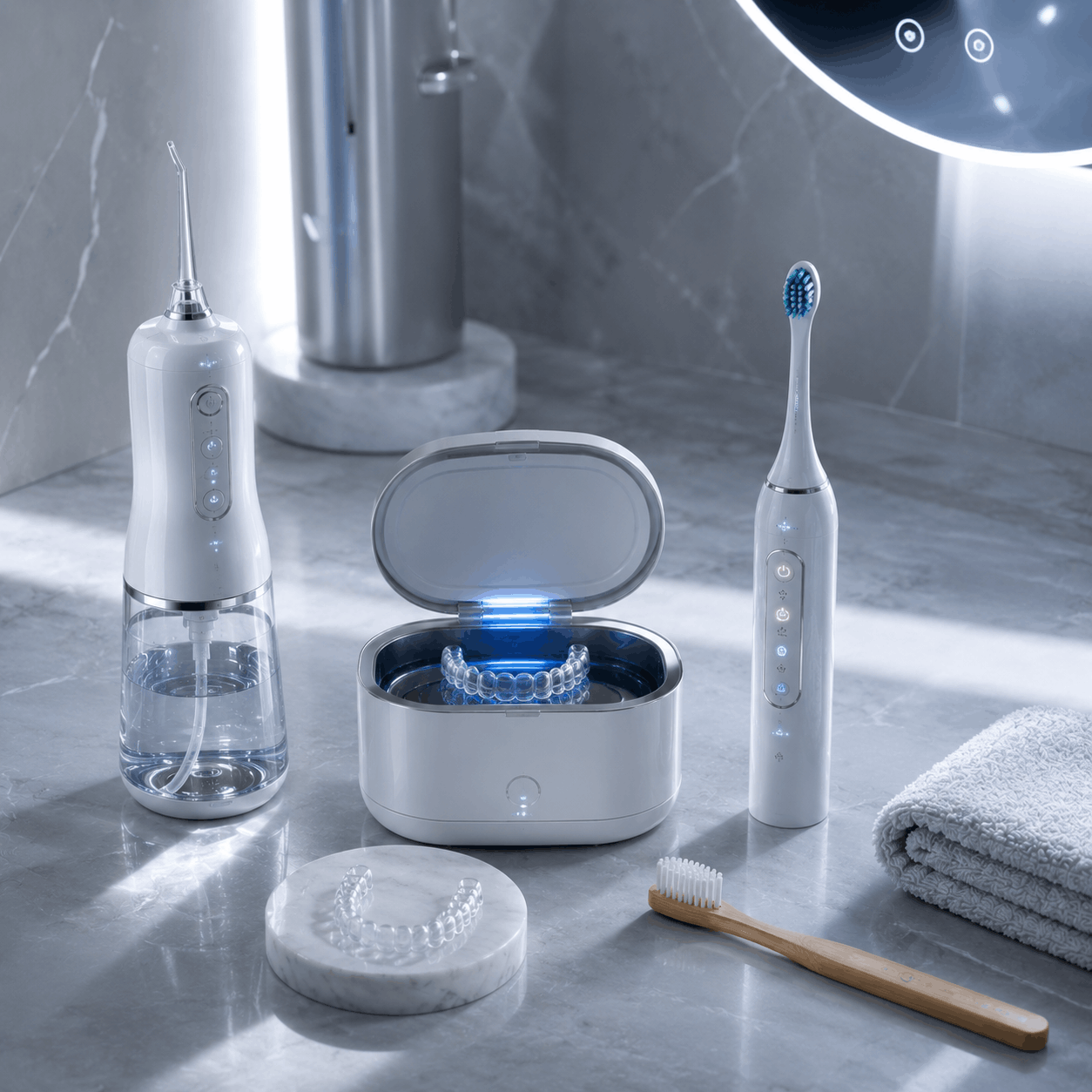
Bleeding gums indicate inflammation. A rotating toothbrush can worsen irritation. A sonic toothbrush in gentle mode, combined with a water flosser, is the optimal combination for this profile.
Profile 2 — Heavy tartar buildup and yellowed teeth
Recommendation: high-frequency sonic toothbrush (40,000+ vibrations/min) with "Polishing" mode
The hydrodynamic effect of the high-frequency sonic toothbrush is particularly effective on extrinsic stains (coffee, tea, red wine).
Profile 3 — Wearer of fixed orthodontic appliances
Recommendation: sonic toothbrush with a small head + essential water flosser
The toothbrush alone is not enough with braces. A water flosser becomes essential for cleaning around brackets and under wires.
Profile 4 — Controlled budget, maximum effectiveness
Recommendation: mid-range sonic toothbrush with built-in timer
There is no need to spend 200€ on a connected toothbrush if you will not use the advanced features. A quality sonic toothbrush at 40-80€ delivers excellent results if used properly morning and evening.
Profile 5 — Environmental awareness
Recommendation: sonic toothbrush with bamboo handle
Sonic technology is now available in eco-friendly models with a 100% natural bamboo handle — with no compromise on performance.
Mistakes to avoid when buying
Mistake 1 — Choosing based only on price
The highest price does not guarantee the best effectiveness for your specific profile. A well-chosen 40€ toothbrush outperforms a 200€ toothbrush that does not suit your needs.
Mistake 2 — Overlooking the availability of replacement heads
If replacement heads are not readily available or are very expensive, you will use your toothbrush with worn bristles — reducing its effectiveness by 30%.
Mistake 3 — Using an adult toothbrush for a child
Adult toothbrushes have heads that are too large and vibrations that are too powerful for the developing enamel of children under 12. A toothbrush specifically designed for children is essential.
Mistake 4 — Scrubbing instead of guiding
With an electric toothbrush, you do not scrub — you gently guide the toothbrush from tooth to tooth. The vibration does the work. Scrubbing as well wears down enamel.
Mistake 5 — Not changing the head often enough
The ADA recommends changing the brush head every 12 weeks. Splayed or flattened bristles reduce effectiveness by up to 30%. (Source: American Dental Association — ada.org)
How to use your electric toothbrush correctly
- Apply the toothpaste to the dry brush head before putting the toothbrush in your mouth — prevents splashing
- Place the toothbrush at 45° to the gum line
- Turn on the toothbrush in your mouth — not before
- Guide it slowly from tooth to tooth — 2 to 3 seconds per tooth
- Do not press — let the weight of the toothbrush make the contact
- Follow the 4 quadrants of 30 seconds each — the timer guides you
- Spit without rinsing — let the fluoride work for at least 30 minutes
Frequently asked questions
What is the lifespan of an adult electric toothbrush?
The handle of a quality electric toothbrush generally lasts 3 to 5 years with proper care. The battery starts to lose capacity after 2 to 3 years of daily use. The brush heads, however, must be replaced every 12 weeks.
Can you use an electric toothbrush with dental implants?
Yes, sonic toothbrushes are compatible with dental implants. "Sensitive" or "Gums" mode is recommended around implant areas. Consult your dental surgeon for a personalized recommendation.
Is the electric toothbrush reimbursed by Social Security?
No. Electric toothbrushes are not reimbursed by the French Health Insurance system. Some supplementary health insurers offer "wellness" or "dental prevention" packages that may partially cover the purchase. Check your health insurance plan.
Do you need to use a specific toothpaste with an electric toothbrush?
No — any standard fluoride toothpaste is suitable. Avoid highly abrasive toothpastes (RDA > 150), which can wear down enamel over time, especially with the high vibration frequency of a sonic toothbrush.
Can an electric toothbrush replace scaling at the dentist?
No. An electric toothbrush prevents tartar buildup by effectively removing plaque every day. It cannot remove tartar that has already calcified, which absolutely requires professional treatment.
Conclusion
Choosing your adult electric toothbrush in 2026 comes down to three questions: what is your main issue (tartar, gums, whitening)? What is your real budget (handle + replacement heads over 12 months)? Do you have specific needs (orthodontic appliance, very sensitive gums, eco-responsibility)?
The adult electric toothbrush remains the most cost-effective preventive investment for your oral health — provided you choose the right model and use it correctly.
Discover the range of electric toothbrushes DentalPro Smile™ — designed for every profile, validated by dental surgeons, delivered in France within 3 to 5 days.
👉 dentalpro-smile.com/fr-fr
RECOMMENDED RELATED ARTICLES:
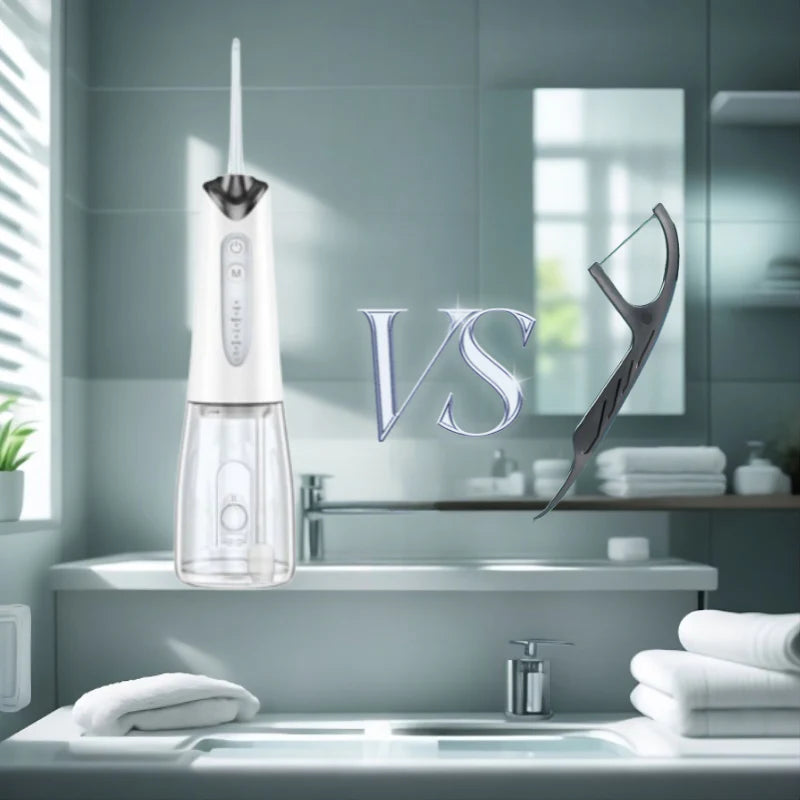
→ Article 2: Water flosser vs dental floss — to complete your routine
→ Article 9: Dental tartar — how to prevent it without going to the dentist
→ Article 8: Children's electric toothbrush — if you have children
Article for informational purposes only. Does not replace the advice of a dental surgeon. DentalPro Smile™ — 2026.

Leave a comment
This site is protected by hCaptcha and the hCaptcha Privacy Policy and Terms of Service apply.