
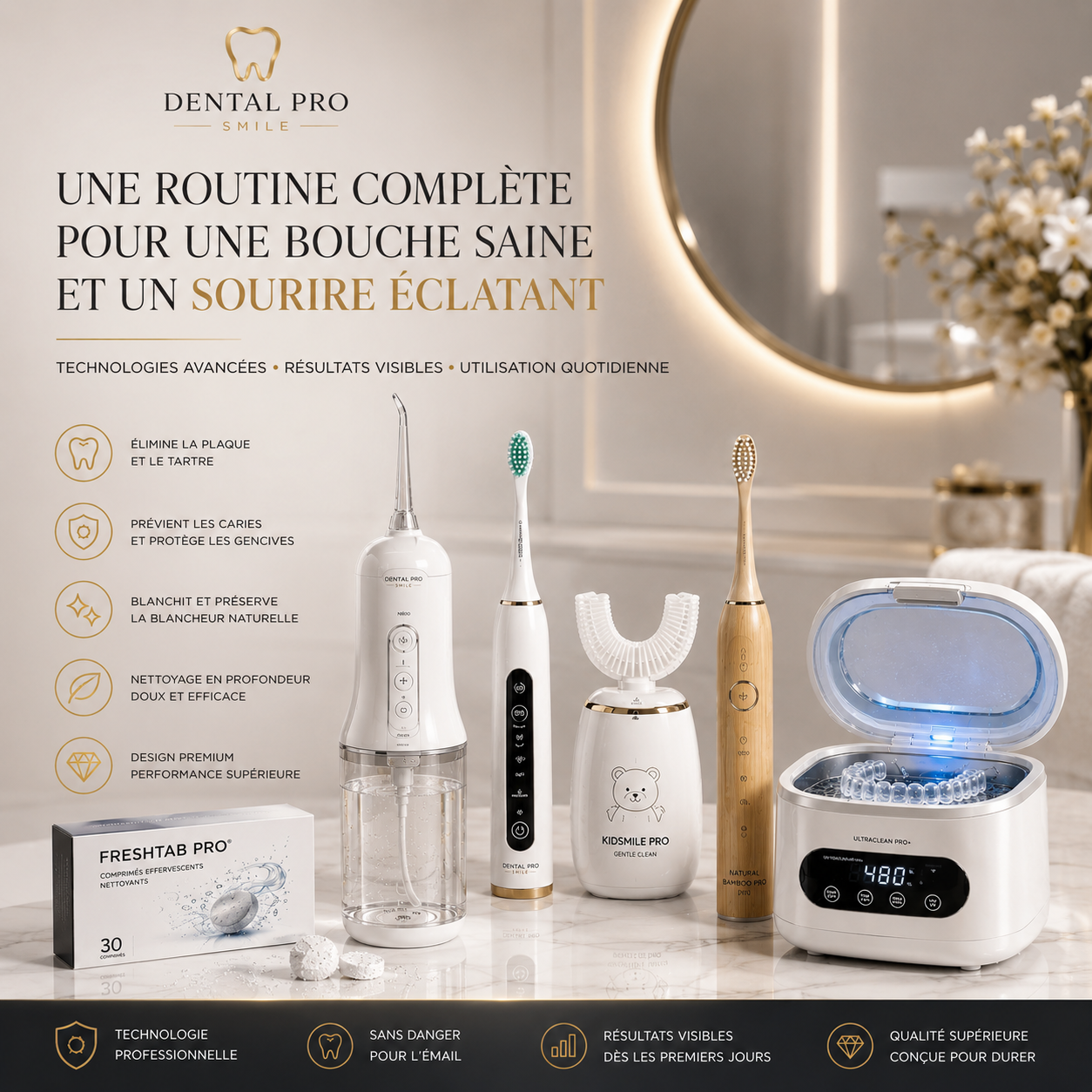
Every day, millions of people brush their teeth without achieving optimal oral hygiene.
Result:
- plaque buildup;
- tartar formation;
- bad breath;
- bleeding gums;
- tooth discoloration.
Yet in most cases, these problems can be avoided with a few simple changes.
Why is poor oral hygiene a problem?
The mouth naturally contains millions of bacteria.
When they are not properly removed, they can contribute to:
- cavities;
- gingivitis;
- bad odours;
- plaque buildup;
- the formation of tartar.
Good hygiene habits are therefore the first line of defence against these issues.
Mistake #1: thinking brushing is enough
Many people think that a simple brushing is enough.
However, some areas are still hard to reach:
- between the teeth;
- the back of the molars;
- around the gums.
These areas quickly become a haven for bacteria.
Mistake #2: neglecting the spaces between the teeth
Food debris often gets trapped between the teeth.
Over time, it contributes to:
- dental plaque;
- tartar;
- bad breath.
Interdental cleaning is now one of the most important steps for keeping the mouth healthy.
Mistake #3: ignoring the tongue
The tongue can harbour a large amount of bacteria.
A coated tongue often contributes to bad breath problems.
Mistake #4: waiting for tartar to appear
Tartar does not form overnight.
It results from a gradual buildup of dental plaque.
Effective prevention can greatly limit its formation.
Mistake #5: not maintaining dental appliances
Retainers, aligners, dentures, and orthodontic appliances require specific cleaning.
Without proper care, they can trap:
- bacteria;
- deposits;
- persistent odours.
Mistake #6: keeping a worn-out toothbrush
A worn toothbrush gradually loses its effectiveness.
Bristles that are bent out of shape clean less well and encourage bacterial retention.
Mistake #7: brushing too quickly
Insufficient brushing leaves a significant amount of plaque behind.
The recommended time is generally at least two minutes.
Mistake #8: not drinking enough water
A dry mouth encourages bacterial growth and bad odours.
Proper hydration helps maintain a healthier oral environment.
Mistake #9: consuming too many staining foods
Coffee, tea, red wine, and certain pigmented foods can contribute to tooth stains.
Mistake #10: neglecting the gums
Healthy gums are essential for preserving teeth over the long term.
Early warning signs include:
- redness;
- swelling;
- bleeding.
Mistake #11: forgetting regular check-ups
Regular visits make it possible to identify certain problems early, before they become more serious.
Mistake #12: not adopting a complete routine
The best results are usually achieved through a comprehensive approach:
- brushing;
- interdental cleaning;
- maintaining dental appliances;
- preventing tartar;
- thorough cleaning of oral care accessories.
How do you build an effective oral hygiene routine?
A complete routine relies on several complementary actions:
Morning:
- thorough brushing;
- cleaning hard-to-reach areas.
Evening:
- brushing;
- interdental cleaning;
- maintaining dental appliances if needed.
This approach helps reduce plaque, bacteria, and food debris responsible for many oral health problems.
FAQ
How do you remove tartar from teeth?
The best strategy remains prevention through regular, complete oral hygiene.
Why do I have bad breath despite brushing?
Bacteria can also build up on the tongue, between the teeth, or on certain dental appliances.
How can gum bleeding be prevented?
Good daily hygiene and regular cleaning of the spaces between the teeth help keep gums healthy.
How do you properly clean a retainer or aligner?
Frequent cleaning helps limit the buildup of bacteria and deposits.
Conclusion
A healthy mouth does not depend on a single action, but on a set of consistent habits.
Correcting these 12 mistakes not only allows you toimprove oral hygiene, but also to reduce the risk of tartar, bad breath, and gum problems while keeping a healthier, more pleasant smile every day.

Leave a comment
This site is protected by hCaptcha and the hCaptcha Privacy Policy and Terms of Service apply.