
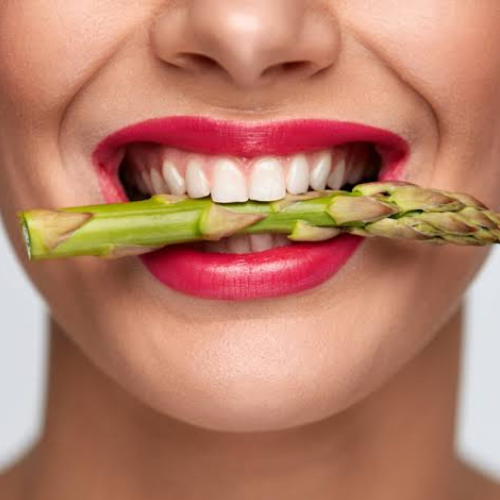
You know that sugar is bad for your teeth. That is the one piece of information most adults retain from their years of dental visits.
But reality is far more nuanced — and some counterintuitive truths can profoundly change the way you eat to protect your enamel.
No, a glass of freshly squeezed orange juice in the morning is not harmless for your teeth. No, eating sugar three times a day is not the same as snacking on sugar continuously. No, coffee is not only bad for your teeth. And no, frequency matters just as much — if not more — than quantity.
This guide clears up the link between diet and dental health with verifiable data.
The basic mechanism — How foods attack enamel
To understand which foods are dangerous, you need to understand the mechanism of cavities and erosion — two distinct phenomena.
Cavities — The bacterial mechanism
Cavities are not caused directly by food. They are caused by bacteria — mainly Streptococcus mutans — which ferment dietary carbohydrates and produce acids.
The process:
Dietary carbohydrates (sugars, starch)
→ Fermentation by S. mutans
→ Acid production (especially lactic acid)
→ Oral pH drops below 5.5
→ Demineralization of enamel
→ Repeated often enough → cavity
The critical concept: frequency, not quantity
Each time carbohydrates are consumed, oral pH drops below 5.5 for 20 to 30 minutes (the "Stephan curve"). Saliva gradually neutralizes these acids and the pH rises again.
- 3 balanced meals a day = 3 acid episodes of 20-30 min each = 60-90 minutes of low pH
- 10 sugary snacks throughout the day = 10 acid episodes = 200-300 minutes of low pH
Continuous snacking is therefore infinitely more dangerous for your teeth than a sugary dessert at the end of a meal — even if the total amount of sugar is identical.
(Source: classic cariology data — Stephan model, included in the recommendations of all dental societies)
Dental erosion — The direct acid mechanism
Erosion is different from cavities. It does not involve bacteria. It is direct chemical dissolution of enamel by dietary or gastric acids.
Erosion threshold: any food or drink with a pH below 5.5 can erode enamel with prolonged or repeated contact.
The culprits — Ranked by actual danger
🔴 Level 1 — Very dangerous
Sugary AND diet sodas
The double problem with sodas: sugar (for sweetened versions) AND acidity (pH 2.5 to 3.5 for most sodas, including diet). The caffeine in colas increases oral dehydration.
Coca-Cola has a pH of about 2.5. Rainwater has a pH of 5.6. (Source: compiled pH data — comparative dental studies)
A soda sipped slowly over 30 minutes keeps oral pH below the erosion threshold for the entire time. Drunk quickly with a straw, exposure is significantly reduced.
Sour candies
Worst possible combination: sugar + acid + sticking to teeth. Sour candies can have a pH below 2 for some products — more acidic than vinegar.
Energy drinks
pH generally between 2.5 and 4, sugar or sweetener, often consumed in large quantities and slowly. Particularly destructive to enamel with regular consumption.
🟡 Level 2 — Dangerous if consumed frequently
“Natural” fruit juices
This is the big surprise for many people. A glass of freshly squeezed orange juice has a pH of about 3.5 to 4. It contains as much free sugar as a soda of the same volume. Natural does not mean harmless for enamel.
What you should do with juices:
- Drink them with meals, not outside of meals
- Never sip them slowly over 30 minutes
- Rinse your mouth with water afterward
- Wait 30 to 60 minutes before brushing your teeth
Wine (especially white)
White wine has a pH between 2.9 and 3.5 — more acidic than red wine. A glass of white wine sipped slowly over 45 minutes keeps oral pH low for the entire time.
White bread, rice, potatoes
Surprisingly, refined starches also quickly break down into sugars, feeding S. mutans almost as effectively as direct sugars. Their sticky texture worsens contact with enamel.
🟢 Level 3 — Low risk with a suitable routine
Coffee and tea
Coffee and tea have a slightly acidic pH (5 to 6) — less dangerous than fruit juices for erosion. Their main problem is tooth staining (tannins, polyphenols) and a slight reduction in salivary flow (caffeine).
Nuanced data: some studies suggest that the polyphenols in green tea and coffee may have inhibitory effects on S. mutans. The data remain preliminary — I cannot confirm a clinically proven protective effect without a stronger source.
Whole fresh fruit
Despite their natural sugar content, whole fruits contain fiber that stimulates saliva and reduces sugar sticking to teeth. Their pH is generally higher than that of the corresponding juices. Best consumed with meals.
The protectors — What is actually good for your teeth
Protector 1 — Calcium and dairy products
Calcium is the main mineral component of enamel (in the form of hydroxyapatite). A calcium-rich diet contributes to enamel remineralization.
Best sources: hard cheeses, plain yogurt, milk, sardines with bones, almonds, broccoli.
What is special about cheese: when eaten at the end of a meal, cheese raises oral pH (alkalizing) and can partially counterbalance the acidic effect of the meal. This is the scientific basis behind the French cultural habit of the "cheese board."
Protector 2 — Xylitol
Xylitol is a sugar alcohol naturally found in certain fruits. S. mutans cannot ferment it — and clinical data suggest that xylitol partially inhibits the growth of S. mutans.
Practical sources: sugar-free chewing gum with xylitol (recommended after meals when brushing is not possible), some sugar-free candies, some toothpastes.
(Source: clinical reviews — Cochrane Review on xylitol and dental caries)
Protector 3 — Water (fluoridated or not)
Water is your teeth’s best friend — for two reasons. It dilutes acids and residual sugars in the mouth, and it maintains optimal saliva flow. Tap water in France generally contains natural fluoride — an added benefit.
Protector 4 — Raw fibrous vegetables
Raw fibrous vegetables (carrots, celery, cucumber) provide a partial mechanical cleaning effect on tooth surfaces during chewing. Their pH is neutral to slightly alkaline. Their water content stimulates saliva.
Protector 5 — Dark chocolate (> 70%)
Dark chocolate with a high cocoa content contains polyphenols that may partially inhibit cavity-causing bacteria. Its sugar content is lower than milk chocolate. It is still a sugary food — but among sugary foods, it is one of the least harmful for teeth.
Summary table — Foods and dental impact
| Food | pH | Cavity risk | Erosion risk | Stains |
|---|---|---|---|---|
| Sugary sodas | 2.5-3.5 | 🔴 High | 🔴 High | 🟡 Moderate |
| Diet sodas | 2.5-3.5 | 🟢 Low | 🔴 High | 🟢 Low |
| Fruit juices | 3.5-4 | 🔴 High | 🟡 Moderate | 🟢 Low |
| White wine | 3-3.5 | 🟡 Moderate | 🔴 High | 🟢 Low |
| Red wine | 3-3.5 | 🟡 Moderate | 🟡 Moderate | 🔴 High |
| Coffee | 5-6 | 🟢 Low | 🟢 Low | 🟡 Moderate |
| Black tea | 4.5-5 | 🟢 Low | 🟢 Low | 🟡 Moderate |
| Water | 7 | 🟢 None | 🟢 None | 🟢 None |
| Cheese | 5.5-7 | 🟢 Low | 🟢 None | 🟢 None |
| Sweets | Variable | 🔴 High | 🟡 Variable | 🟡 Variable |
| Raw vegetables | 5.5-7 | 🟢 None | 🟢 None | 🟢 None |
The 7 dietary rules to protect your teeth
Rule 1 — Limit the number of acid episodes per day
3 meals + 1 snack max. Every sugary snack is an additional 20-30 minute acid episode.
Rule 2 — End meals with a neutral or alkalizing food
Water, cheese, raw vegetables — not a sugary dessert eaten alone 2 hours after the meal.
Rule 3 — Never sip an acidic or sugary drink
Drinking quickly (in less than 10 minutes) drastically reduces enamel exposure to acids.
Rule 4 — Use a straw for acidic drinks
Reduces direct contact with teeth — especially useful for sodas and juices.
Rule 5 — Rinse with water after an acidic or sugary drink
Rinsing with water dilutes acids and raises oral pH more quickly.
Rule 6 — Wait 30-60 minutes before brushing after an acidic meal
Enamel is temporarily softened by dietary acids. Brushing immediately worsens abrasion.
Rule 7 — Chew sugar-free gum (xylitol) after meals
Stimulates saliva (neutralizing effect) and may inhibit S. mutans. Particularly useful when brushing is not possible.
FAQ
Is honey less harmful than sugar for teeth?
No. Honey mainly contains fructose and glucose — the same fermentable sugars used by S. mutans. Its pH is slightly acidic. For teeth, it is just as cavity-causing as refined sugar, if not more so because of its sticky texture.
Do “whitening” toothpastes protect against food stains?
Whitening toothpastes work through mild abrasion on superficial staining deposits. They may reduce coffee or tea stains in the short term. Regular use on sensitive teeth can worsen sensitivity through enamel abrasion.
Should you cut out fruit to protect your teeth?
No. Whole fruits contain fiber, water, and essential nutrients. Their impact on teeth is significantly lower than that of the corresponding juices. Eating them with meals (and not between meals) and rinsing with water afterward is enough in most cases.
Can cow’s milk be replaced by plant-based milks for dental health?
Cow’s milk is a major source of calcium and casein, which protect enamel. Plant-based milks (almond, oat, soy) have varying nutritional profiles. Calcium-fortified milks can offer a partial alternative. Oat milk, rich in fermentable carbohydrates, is not ideal when consumed frequently without brushing.
Conclusion
The sugar rule is too simplistic. The truth about diet and teeth is more nuanced — and more actionable. It is not sugar at dessert that destroys enamel, it is continuous snacking. It is not fruit that erodes teeth, it is fruit juice sipped all morning long. It is not coffee that causes cavities, it is sour candies.
Adapting your eating habits — reducing the frequency of acid episodes, ending with a neutral food, rinsing with water — is as effective for dental health as a good brushing routine.
HydroJet Pro™ DentalPro Smile™ after meals — 2 minutes to remove food residue before it becomes a problem.
👉 dentalpro-smile.com/fr-fr
RECOMMENDED RELATED ARTICLES:
→ Article 5: Sensitive teeth — often linked to dietary erosion
→ Article 9: Dental tartar — linked to diet
→ Article 10: Natural whitening — food stains
Article for informational purposes only. Does not replace the advice of a dentist or dietitian. DentalPro Smile™ — 2026.

Leave a comment
This site is protected by hCaptcha and the hCaptcha Privacy Policy and Terms of Service apply.