
You brush your teeth every day... but they still look yellow?
You look in the mirror and feel like your smile has lost its shine.
And yet, you brush your teeth morning and night. You sometimes use mouthwash. You pay attention to your hygiene. Despite that, your teeth seem duller than before.
This situation is extremely common. Over time, morning coffee, tea, red wine, certain colored foods, and tobacco can gradually alter the natural color of your teeth. Even if you do not smoke, it is common to notice slight yellowing linked to the natural aging of enamel.
Faced with this, many people look for how to whiten your teeth naturally without using harsh methods or putting their oral health at risk.
But not all the solutions suggested on the Internet are equal. Some are based on solid scientific evidence, while others can cause lasting damage to enamel.
In this complete guide, we will separate myths from recommendations based on current knowledge, to help you regain a brighter smile while protecting your teeth.
Contents
- Why do teeth turn yellow?
- Can stains disappear naturally?
- Natural methods that may help
- Methods to avoid
- Daily habits to keep your teeth whiter
- When should you consider teeth whitening at the dentist?
- FAQ
Why do teeth turn yellow?
Quick answer
Teeth can turn yellow because of external staining (coffee, tea, tobacco, diet), natural enamel wear, or certain medical treatments. Good hygiene helps limit surface stains, but it does not change the tooth's natural color.
Contrary to a widely held belief, slightly ivory-colored teeth are often perfectly healthy.
Natural color varies from one person to another depending on several factors:
- enamel thickness;
- the color of the dentin beneath the enamel;
- age;
- diet;
- certain lifestyle habits.
Over time, enamel becomes slightly thinner. The dentin, which is naturally more yellow, then becomes more visible.
Added to this are food pigments that gradually build up.
The main culprits are:
- coffee;
- tea;
- red wine;
- certain red fruits;
- curry;
- colored drinks;
- tobacco.
These stains are generally superficial and can be limited with a good hygiene routine.
Can stains disappear naturally?
Quick answer
Some surface stains can be reduced through rigorous oral hygiene. However, the intrinsic color of the tooth cannot be changed by natural remedies.
It is important to distinguish between two types of staining.
Surface stains
They settle on the surface of the enamel.
They are often linked to:
- coffee;
- tea;
- tobacco;
- colored drinks.
Improvement is sometimes seen after more effective cleaning of dental plaque and pigmented deposits.
Internal discoloration
This affects the very structure of the tooth.
In this case, no toothpaste, no home remedy, and no natural recipe can durably change the shade.
Only a professional can suggest suitable solutions after a clinical examination.
Natural methods that can really help
Quick answer
No natural method can chemically whiten teeth the way a treatment performed by a professional can. However, certain habits can limit surface staining and visibly improve the brightness of your smile.
1. Improve brushing quality
The first step is to effectively remove dental plaque.
Plaque that is not properly removed encourages the buildup of food pigments.
Health Insurance recommendations are to brush your teeth twice a day for two minutes with fluoride toothpaste, adding interdental cleaning if necessary. This routine helps prevent cavities and gum disease.
A properly used electric toothbrush can make daily plaque removal easier for many people.
2. Adopt a complete oral hygiene routine
Brushing is the foundation of good hygiene, but it does not clean every tooth surface.
According to the recommendations of many oral health organizations, dental plaque also builds up between the teeth and along the gumline, areas that are often hard to reach with a regular toothbrush.
That is why a complete routine generally includes:
- brushing twice a day;
- interdental cleaning (dental floss or interdental brushes);
- regular checkups with a dentist.
For people with interdental spaces that are difficult to clean, implants, crowns, or braces, a water flosser can effectively complement this routine.
👉 Also discover our collection of HydroJet Pro™ to make cleaning hard-to-reach areas easier.
The goal is not to artificially whiten teeth, but to remove more plaque and deposits that can dull their natural shine.
3. Get scaling done when necessary
Quick answer
Professional scaling does not chemically lighten teeth, but it removes tartar and some surface stains. Many patients therefore notice a smile that looks cleaner and brighter after treatment.
Tartar acts like a real sponge.
Its porous surface easily traps:
- coffee pigments;
- tea;
- red wine;
- certain highly colored foods;
- cigarette smoke.
By removing these deposits, scaling often helps restore the tooth's natural shade.
However, this is not whitening in the medical sense of the term.
Do natural remedies really work?
The Internet is full of home remedies promising whiter teeth in just a few days.
Some are simply ineffective.
Others may pose risks when used repeatedly.
Here is what current scientific knowledge shows.
| Method | Can improve appearance? | Can whiten the tooth? | Precautions |
|---|---|---|---|
| Regular brushing | Yes | No | Use with proper technique |
| Fluoride toothpaste | Yes (surface stains) | No | Choose a suitable product |
| Dental floss | Yes | No | Daily use recommended |
| Water flosser | Yes (plaque and debris) | No | Supplement to brushing |
| Baking soda | Slightly on some stains | No | Occasional use only |
| Activated charcoal | Limited evidence | Not proven | May be abrasive depending on the product |
| Lemon | No | No | Not recommended because of its acidity |
| Vinegar | No | No | Not recommended because of the risk of enamel erosion |
Is baking soda really effective?
Quick answer
Baking soda can help remove some surface stains when used in moderation. However, it does not change the intrinsic color of the tooth and does not replace professional whitening.
Baking soda has mild abrasive properties.
It is precisely this abrasion that can sometimes reduce certain stains present on the enamel surface.
However, using it too often can lead to gradual enamel wear.
For this reason, it is best to ask a professional for advice before adding this type of product to your routine.
Does activated charcoal whiten teeth?
In recent years, activated charcoal has enjoyed major commercial success.
However, the available scientific data remain limited.
Some studies suggest that it can remove some surface stains.
However, the evidence is insufficient to say that it truly whitens teeth.
Several scientific societies also warn about the potential risk of abrasion from certain highly concentrated products.
These products should therefore be used with caution.
Why should lemon or vinegar be avoided?
This tip is probably one of the most widespread on the Internet.
Yet it is not recommended.
Lemon has a very acidic pH.
Vinegar does too.
With repeated exposure, these acids can gradually weaken enamel.
Once enamel is worn down, it does not naturally regenerate.
Paradoxically, enamel loss can make teeth look more yellow, because the underlying dentin becomes more visible.
Habits that help keep teeth whiter
Small daily habits are often more effective in the long run than occasional solutions.
Here are the ones that offer the best benefit-to-effort ratio:
- brush your teeth twice a day;
- clean between your teeth every day;
- limit highly colored drinks whenever possible;
- rinse your mouth with water after coffee or tea;
- quit tobacco if you smoke;
- have regular checkups with your dentist.
These habits do not change the natural color of your teeth, but they help preserve their brightness for longer.
What role can an electric toothbrush play?
An electric toothbrush is not a whitening product.
However, thanks to its regular movements and proper technique, it can help some people remove more dental plaque.
This improvement in cleaning can reduce the deposits responsible for teeth looking dull.
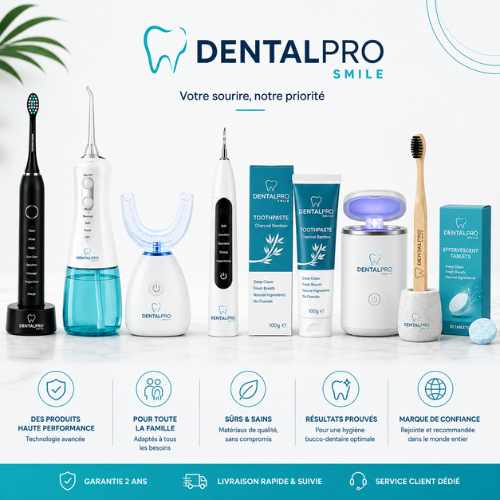
At DentalPro Smile™, our PureBrush Pro™ was designed to support a complete daily routine alongside your dental professional's recommendations.
When should professional whitening be considered?
Quick answer
If your teeth have internal discoloration, if stains persist despite good oral hygiene, or if you want to durably change their shade, whitening carried out under the supervision of a dentist is the most suitable solution.
Many people think that yellow teeth are necessarily dirty.
In reality, that is not always the case.
It is essential to distinguish between two situations:
- surface stains, which settle on the enamel surface;
- internal discoloration, which directly affects the structure of the tooth.
The first can sometimes be reduced through good hygiene or scaling.
The second requires evaluation by a healthcare professional.
Before any whitening procedure, a dentist checks in particular:
- the absence of cavities;
- the condition of the gums;
- the possible presence of cracks;
- the cause of the discoloration.
This step is important because not all teeth respond the same way to whitening treatments.
Mistakes that speed up tooth yellowing
Certain everyday habits gradually encourage the appearance of new stains.
By identifying them, it is often possible to preserve your smile's natural brightness for longer.
1. Frequently drinking colored beverages
Coffee, tea, red wine, and certain soft drinks contain pigments that can gradually settle on enamel.
The goal is not to eliminate them completely, but to limit prolonged contact with your teeth.
Simply rinsing with water after drinking them can already be a good habit.
2. Smoking
Tobacco is one of the main causes of tooth staining.
Tar and nicotine gradually become embedded in enamel irregularities and also promote the buildup of dental plaque.
Quitting tobacco brings significant benefits for overall health and oral health.
3. Neglecting interdental spaces
Brushing does not perfectly reach all tooth surfaces.
Interdental spaces are areas where plaque and food residue can build up.
Over time, these deposits encourage the appearance of stains and tartar.
Daily use of dental floss, interdental brushes, or a water flosser can effectively complete cleaning.
4. Using products that are too abrasive
Certain powders, very abrasive toothpastes, or some home remedies can create the impression of immediate whiteness.
In the long term, however, they may gradually wear down enamel.
Thinner enamel reveals more of the dentin, which is naturally more yellow.
The result can then be exactly the opposite of what was intended.
Can white teeth be maintained over time?
Quick answer
Yes, it is possible to preserve the natural brightness of teeth for longer by adopting a regular hygiene routine, a balanced diet, and appropriate dental follow-up. However, no method can completely prevent the natural aging of enamel.
It is important to have realistic expectations.
Even after professional whitening, teeth naturally continue to change over time.
The goal is therefore not to have perfectly white teeth all the time, but to slow the appearance of new stains.
The habits that offer the best long-term results are:
- brushing twice a day with fluoride toothpaste;
- daily cleaning between the teeth;
- regular visits to a dentist;
- moderate consumption of strongly staining foods;
- good hydration.
These simple habits often help maintain a brighter smile for many years.
Comparison table of the main solutions
| Solution | Goal | Can lighten the natural color? | Suitable for daily use? |
|---|---|---|---|
| Brushing with fluoride toothpaste | Remove plaque | No | Yes |
| Electric toothbrush | Improve cleaning | No | Yes |
| Water flosser | Complete interdental cleaning | No | Yes |
| Dental floss | Remove plaque between the teeth | No | Yes |
| Professional scaling | Remove tartar and some surface stains | No | According to the practitioner's recommendations |
| Professional whitening | Change tooth shade when indicated | Yes, under professional supervision | No |
The most common misconceptions
"The harder I brush, the whiter my teeth will be"
False.
Brushing too hard can lead to enamel wear and gum irritation.
Proper technique matters more than the force used.
"Perfectly white teeth are always healthier"
False.
Tooth color naturally varies from one person to another.
Slightly ivory-colored teeth can be perfectly healthy.
"Home remedies replace professional whitening"
False.
Natural recipes can sometimes reduce certain surface stains, but they do not durably change the intrinsic color of the tooth.
"Yellow teeth necessarily mean poor brushing"
False.
Age, enamel thickness, certain medications, and genetic factors can also influence tooth color.
Best practices for protecting your smile
If you want to keep your teeth radiant for longer, here is a simple routine to follow:
✔ Brush your teeth for two minutes, morning and night.
✔ Clean between your teeth every day.
✔ Limit tobacco whenever possible.
✔ Rinse your mouth after strongly colored drinks.
✔ Have your oral health checked regularly.
✔ Replace your toothbrush or brush head according to the manufacturer's recommendations.
These habits, combined with a balanced diet, are the best strategy for preserving the natural appearance of your smile.
Frequently asked questions (FAQ)
How can you whiten your teeth naturally and quickly?
There is no natural method that can quickly and durably change the intrinsic color of teeth. However, good oral hygiene, combined with the removal of plaque and surface stains, can gradually improve the brightness of your smile.
Does baking soda really whiten teeth?
Sodium bicarbonate can help remove some surface stains when used in moderation. However, it does not whiten the internal structure of the tooth, and excessive use can promote enamel wear.
Is activated charcoal effective?
The available scientific evidence is limited. Some products may help reduce surface stains, but there is no solid evidence showing that they durably lighten the natural color of teeth. In addition, some charcoal-based products can be abrasive.
Are lemon or vinegar recommended?
No.
Lemon, vinegar, and other highly acidic products can promote enamel erosion when used repeatedly. Major oral health recommendations advise against these practices.
Does an electric toothbrush make teeth whiter?
An electric toothbrush does not change the natural color of teeth.
However, it can improve the removal of dental plaque and pigmented deposits in some people when used correctly.
Does a water flosser whiten teeth?
No.
A water flosser is designed to clean interdental spaces and help remove food debris as well as some dental plaque.
It contributes to better oral hygiene but is not a whitening treatment.
Why do my teeth stay yellow despite good brushing?
Several factors can explain this situation:
- a naturally more ivory shade;
- thinner enamel revealing the dentin;
- age;
- certain internal discoloration;
- past medication treatments.
In these situations, simple brushing does not change tooth shade.
Do whitening toothpastes work?
Whitening toothpastes can help remove some surface stains thanks to their cleaning or mildly abrasive agents.
They generally do not change the intrinsic color of teeth.
Can you get perfectly white teeth back?
Natural whiteness varies from one person to another.
The realistic goal is to restore or preserve the natural shade of your teeth, rather than aiming for an artificial whiteness.
How often should scaling be done?
The frequency depends on each person.
Your dentist is best placed to determine the interval suited to your situation, based on your risk of tartar buildup and your gum health.
Key points to remember
If you want to regain a brighter smile, these are the main tips to keep in mind:
✔ Good daily hygiene remains the best way to prevent surface stains.
✔ Natural remedies do not replace treatment when it is medically indicated.
✔ Highly abrasive or acidic products can damage enamel.
✔ Regular visits to your dentist help maintain good oral health.
✔ Suitable equipment, used alongside proper brushing technique, can help improve daily plaque removal.
Our DentalPro Smile™ advice
At DentalPro Smile™, we believe that a radiant smile starts above all with a regular hygiene routine and lasting habits.
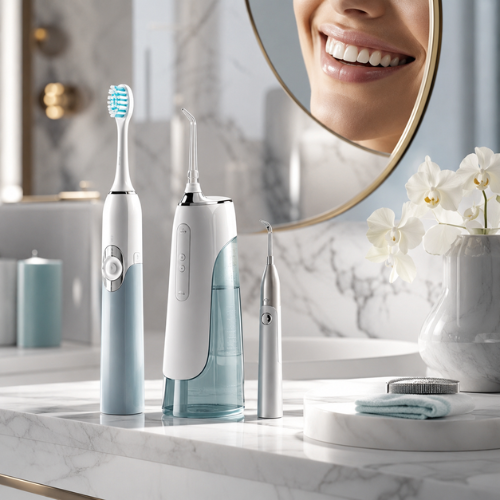
Our range includes electric toothbrushes, water flossers, ultrasonic scalers, and accessories designed to complement your daily routine, alongside your dentist's recommendations.
The goal is not to promise unrealistic whiteness, but to help you preserve the health and natural brightness of your smile every day.
Also discover
To further improve your oral hygiene routine, we also recommend these articles:
- How to remove tartar from teeth without going to the dentist?
- Water flosser or dental floss: which should you choose for your situation?
- Why do gums bleed? Causes, treatments, and solutions
You can also discover our collections:
- Electric toothbrushes
- Water flossers
- Ultrasonic scalers
- Tongue scrapers
- Dental floss
Sources
The recommendations presented in this article are based in particular on the following resources:
- Health Insurance (Ameli) – Recommendations on oral hygiene and the prevention of dental disease.
- French Union for Oral Health (UFSBD) – Prevention and oral hygiene advice.
- World Health Organization (WHO) – General information on oral health.
- American Dental Association (ADA) – Public information on brushing, tooth discoloration, and preventive care.
About this article
This article was written for informational and educational purposes based on recommendations from recognized health organizations and the scientific literature available at the time of writing.
It does not replace a personalized diagnosis or the advice of a healthcare professional.
Legal notice
Informational article only. It does not replace the opinion, diagnosis, or treatment of a dentist or any other qualified healthcare professional. DentalPro Smile™ – 2026.

Leave a comment
This site is protected by hCaptcha and the hCaptcha Privacy Policy and Terms of Service apply.