
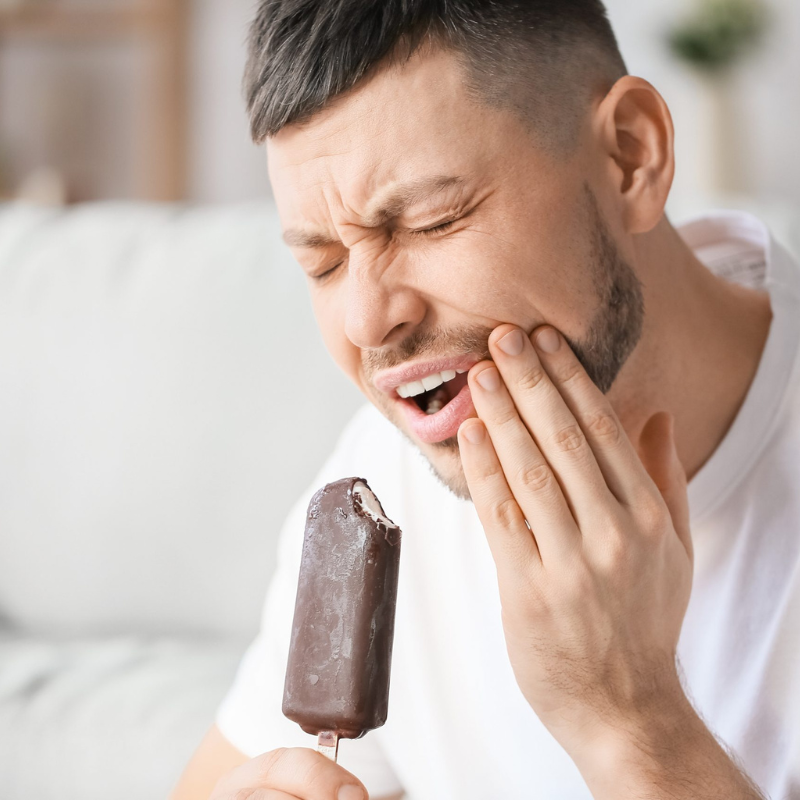
A sip of cold water. A breath of fresh air in winter. A bite of ice cream. And that sharp, brief pain that disappears as quickly as it came — but comes back every time.
If this sounds familiar, you are one of the roughly 1 in 3 adults in France who suffer from dentin hypersensitivity. (Source: compiled data — French odontology societies)
The good news: in the majority of cases, this sensitivity is not irreversible. It has identifiable causes and accessible solutions. The less good news: if ignored, it can gradually worsen and indicate structural problems that will require professional intervention.
Understanding dentin hypersensitivity — The exact mechanism
To understand why your teeth are sensitive, you need to understand their structure.
Structure of a tooth:
- Enamel : a hard, non-innervated outer layer that protects the tooth
- Dentin : the underlying layer crossed by thousands of microscopic tubules (dentinal tubules) that connect with the nerve
- Pulp : living tissue at the center of the tooth, containing the nerve and blood vessels
When enamel thins or the gums recede, the dentin becomes exposed. Cold, heat, sugar, or acidity then stimulate the fluids in the dentinal tubules — transmitting a pain signal to the nerve.
This phenomenon is called dentin hypersensitivity or dentin hyperesthesia.
The 6 main causes
Cause 1 — Enamel erosion
Enamel gradually erodes under the effect of acids — dietary acids (sodas, fruit juices, wine, vinegar) or gastric acids (gastroesophageal reflux, repeated vomiting). Once eroded, enamel does not regenerate.
Associated signs: teeth that appear more transparent at the incisal edge, a smooth and shiny tooth surface (glassy appearance).
Cause 2 — Abrasion from excessive brushing
Brushing too vigorously with a brush that is too hard gradually wears away the enamel — especially at the neck of the tooth (tooth-gum junction). This phenomenon is made worse if brushing takes place within 30 minutes after an acidic meal (the enamel is temporarily softened by dietary acids).
Associated signs: V-shaped notches at the neck of the teeth, particularly visible on canines and premolars.
Cause 3 — Gum recession
When the gums recede, they expose the root of the tooth — an area naturally not protected by enamel (the root is covered by cementum, a more permeable material). This direct root exposure often causes intense sensitivity.
Associated signs: teeth that visually appear to be "getting longer," low gums, sensitivity when brushing in the cervical area.
Cause 4 — Cracks and fractures in the enamel
Cracked enamel exposes the underlying dentin. Cracks can be caused by trauma, bruxism (nighttime teeth grinding), or extreme and repeated temperature changes (very hot foods followed by very cold ones).
Cause 5 — Early-stage cavities
A developing cavity gradually perforates the enamel to reach the dentin. Sensitivity to cold, sugar, or percussion is often the first clinical sign of a cavity approaching the dentin.
Cause 6 — Excessive teeth whitening
Whitening products (hydrogen peroxide or carbamide peroxide) can cause temporary sensitivity by temporarily opening the dentinal tubules. This sensitivity is generally reversible once treatment is stopped.
Diagnostic chart — Identify your cause
| Trigger | Duration of pain | Likely cause |
|---|---|---|
| Cold only | Brief (< 30 sec) | Mild dentin hypersensitivity |
| Cold AND hot | Prolonged (> 30 sec) | Possible pulpal involvement |
| Sugar | Brief | Early-stage cavity or hypersensitivity |
| Brushing | Brief at the neck of the tooth | Gum recession or abrasion |
| Spontaneous (without a trigger) | Variable | Pulpitis — urgent consultation |
| When chewing | Brief | Crack or advanced cavity |
Solutions that work — In order of effectiveness
Solution 1 — Desensitizing toothpaste
Desensitizing toothpastes contain either potassium nitrate (blocks nerve transmission) or stannous fluoride or hydroxyapatite (seal the dentinal tubules).
They require regular use for 2 to 4 weeks before the effects become significant.
Recommended use: twice a day, without rinsing after brushing to maximize contact with the teeth.
Solution 2 — Adapt your brushing technique
If abrasion is the cause, the solution is immediate and free:
- Reduce brushing pressure
- Switch to a soft- or extra-soft-bristled brush
- Do not brush within 30 minutes after an acidic meal
- With an electric toothbrush: do not press — let it vibrate
Solution 3 — Protect enamel from acid erosion
- Reduce the consumption of acidic drinks (sodas, juice, wine)
- Drink acidic beverages through a straw (reduces contact with the teeth)
- Wait 30 to 60 minutes after an acidic meal before brushing
- In the event of reflux: medical treatment for gastroesophageal reflux
Solution 4 — Apply concentrated fluoride
Fluoride remineralizes enamel and can partially seal the dentinal tubules. Toothpastes with high fluoride content (1450 ppm or more) are recommended for at-risk profiles.
⚠️ The optimal amount of fluoride in toothpaste should be determined with your dentist, especially for children.
Solution 5 — Professional treatments
If at-home solutions are insufficient after 4 to 6 weeks:
| Professional treatment | Mechanism | Durability |
|---|---|---|
| In-office fluoride varnish | Temporary sealing of the tubules | 3-6 months |
| Bonding resin application | Sealing of exposed tubules | 1-2 years |
| Gum graft | Covers exposed roots | Permanent |
| Crown or veneer | Covers eroded enamel | 10-15 years |
What you absolutely must avoid
❌ Ignoring sensitivity that lasts more than 30 seconds
Prolonged pain after thermal stimulation indicates possible pulpal involvement — a stage that may require root canal treatment if left untreated.
❌ Brushing immediately after eating something acidic
Always wait 30 to 60 minutes after an acidic meal. Enamel temporarily softened by acids is particularly vulnerable to mechanical abrasion.
❌ Multiplying whitening sessions
Repeated or prolonged whitening worsens sensitivity. If you have sensitive teeth, avoid concentrated whitening products without your dentist's advice.
❌ Using a highly abrasive toothpaste
Avoid "intensive whitening" toothpastes with an RDA index above 150 if you have sensitivity. (Source: Journal of the American Dental Association — RDA guidelines)
FAQ
Can tooth sensitivity go away on its own?
Sometimes. Mild sensitivity linked to recent teeth whitening or a period of overly vigorous brushing may resolve on its own within a few days. Persistent sensitivity (more than 2 weeks) requires special attention and potentially a consultation.
Which toothbrush is recommended for sensitive teeth?
A sonic toothbrush with a "Sensitive" mode is ideal. It cleans effectively without the excessive pressure of a manual toothbrush. The hydrodynamic effect of the sonic toothbrush allows thorough cleaning without scrubbing — which minimizes abrasion on enamel and exposed roots.
Is baking soda good for sensitive teeth?
No — it is contraindicated. Baking soda is slightly abrasive and can worsen enamel erosion on already sensitive teeth. Avoid baking soda toothpastes if you have sensitivity.
Can sensitive teeth indicate a more serious condition?
In most cases, tooth sensitivity is harmless. But spontaneous pain (without an external trigger), intense and persistent pain, or pain under pressure may indicate an advanced cavity, pulpitis, or an abscess — requiring prompt dental consultation.
Conclusion
Teeth that are sensitive to cold are a sign that the protective enamel is thinning or that the gums are receding — two processes that can be slowed or even stopped with the right routine. Desensitizing toothpaste, gentle brushing technique, protection against dietary acids, and an electric toothbrush with a sensitive mode: these four combined actions significantly reduce sensitivity in the vast majority of cases.
The DentalPro Smile™ range offers sonic toothbrushes with a Sensitive mode specifically designed for people with sensitive teeth — ultra-soft bristles, adapted vibrations.
👉 dentalpro-smile.com/fr-fr
RECOMMENDED RELATED ARTICLES:
→ Article 3: Bleeding gums — often associated with sensitive teeth
→ Article 10: Natural teeth whitening — precautions for sensitive teeth
→ Article 18: Diet and dental health
Article for informational purposes only. Does not replace the advice of a dentist. DentalPro Smile™ — 2026.

Leave a comment
This site is protected by hCaptcha and the hCaptcha Privacy Policy and Terms of Service apply.