
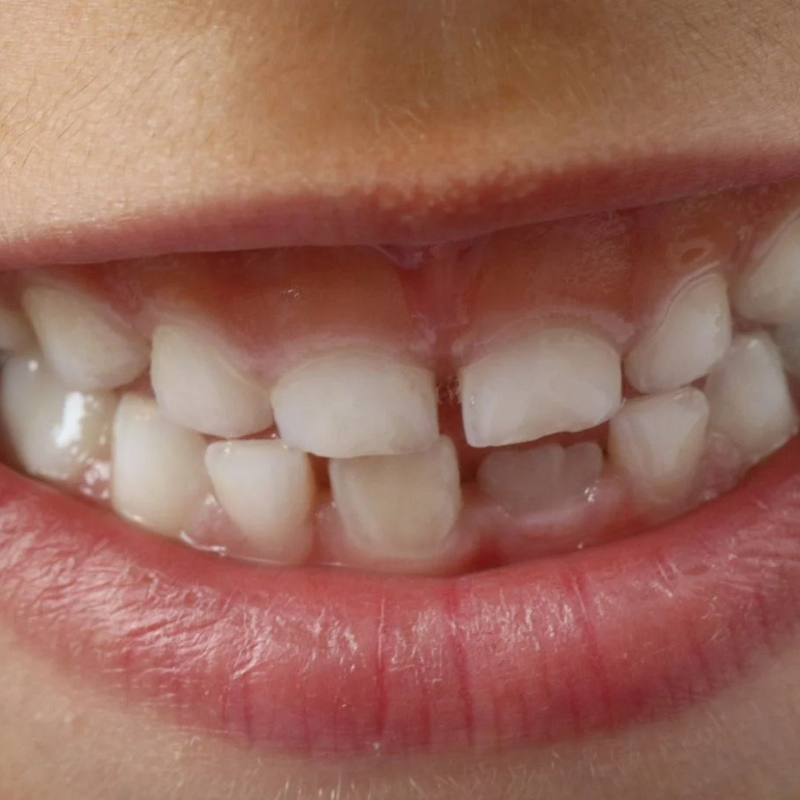
The bedtime brushing battle. You know it.
Negotiations, dashing to the bedroom, swallowing toothpaste instead of spitting it out, 20 seconds of brushing declared "done" after a token swipe with the brush.
If this scene feels familiar, you're not alone — and it's not a parenting issue. It's a tool issue.
An age-appropriate kids' electric toothbrush transforms this moment completely: the vibration sparks curiosity, the timer gamifies the 2 minutes, and the cleaning result is objectively better than what a manual brush can achieve in small hands.
In France, according to data from the M'T dents program, a significant proportion of CM2 children have untreated cavities — a figure that highlights the importance of children's dental hygiene. (Source: ARS — school oral health data 2025)
At what age should you start using an electric toothbrush?
From birth to 18 months — Gum cleaning
Before the first teeth appear, the baby's gums should be cleaned with a damp gauze pad after each feeding. No electric toothbrush at this stage.
From 18 months to 3 years — Soft manual brush under supervision
The first baby teeth appear between 6 and 12 months. Brushing begins as soon as the first tooth appears, with a manual toothbrush with very soft bristles and a tiny head. The parent brushes the child's teeth — not the child alone.
From 3 to 6 years — Introducing the electric toothbrush
This is the ideal age to introduce the kids' electric toothbrush. From 3 years old, the mouth is large enough for an appropriately sized children's brush head. The vibration is fascinating and encourages buy-in. The built-in timer helps establish the correct brushing time.
Important: at this age, the parent supervises and guides. The child holds the brush, but the parent checks that all areas are reached.
From 6 to 12 years — Gradual independence
The first permanent teeth appear from age 6. The stakes get higher — these teeth will never be replaced. The electric toothbrush remains recommended, with parental supervision until age 8-9, then increasing independence.
From 12 to 15 years — Transition to the adult model
From age 12, depending on mouth size, the teen can gradually switch to an adult electric toothbrush with a larger head. Some teens with smaller mouths will keep using a kids' model until age 14-15.
The essential criteria for choosing a kids' electric toothbrush
Criterion 1 — Head size (the most important)
A head that is too large won't clean a child's back molars — it gets stuck in the mouth and can't be positioned properly.
| Age | Recommended head size |
|---|---|
| 3-6 years | Ultra-small (< 15 mm) |
| 6-10 years | Small (15-18 mm) |
| 10-14 years | Small to standard (18-20 mm) |
Criterion 2 — Vibration softness
The enamel on baby teeth and newly erupted permanent teeth is thinner and more fragile than mature adult enamel. A brush with vibrations that are too strong can be uncomfortable and discouraging.
High-quality kids' brushes offer adapted sonic vibrations — effective but noticeably gentler than adult models.
Criterion 3 — Built-in timer with quadrant signal
The timer is non-negotiable. It must:
- Indicate the end of the 2 minutes of brushing
- Ideally beep every 30 seconds to signal the quadrant change
Without a timer, a child stops after 30 to 45 seconds in 80% of cases.
Criterion 4 — Attractive design
A brush with a colorful design, a character, or the child's favorite color significantly increases buy-in and consistency. This is not trivial — it's documented behavioral data.
Criterion 5 — Water resistance (IPX rating)
Children often use their brush at bath time. An IPX7 brush can be used in water up to 1 meter deep — making it safe to use in the bath.
Criterion 6 — Battery life
Children forget to charge things. A battery life of 2 to 4 weeks minimizes routine interruptions due to a dead battery.
Comparison table — Kids' electric toothbrush by age
| Age | Head size | Vibrations | Supervision | Timer |
|---|---|---|---|---|
| 3-6 years | Ultra-small | Very gentle | Complete | Required |
| 6-9 years | Small | Gentle | Partial | Required |
| 9-12 years | Small to standard | Moderate | Check-in | Recommended |
| 12-15 years | Standard | Standard | Independent | Recommended |
How to make brushing appealing to a child
What works:
✅ Parent-child simultaneous brushing : imitation is the most powerful learning mechanism. Brush your teeth at the same time as your child in the same bathroom.
✅ The brushing chart : for ages 3-7, a chart with checkboxes or stars to stick on after each brushing creates a positive ritual and a sense of achievement.
✅ The brush they choose themselves : letting the child choose the color or design of their brush creates a sense of ownership — they take better care of it.
✅ Naming the brush : absurd for an adult, but extremely effective for a 3- to 5-year-old child who builds an emotional bond with their "tool".
What doesn't work:
❌ Threatening them with the dentist as punishment — this creates a fear of the dentist that can last a lifetime.
❌ Negotiating every evening — the child learns that it's negotiable and comes back to it every evening.
❌ Brushing at full speed to avoid tears — 20 seconds of forced brushing is useless.
The M'T dents program — an advantage to make the most of
Since April 1, 2025, every child aged 3 to 24 can benefit from one free dental checkup each year, fully covered by Health Insurance and complementary health plans. (Source: ameli.fr — M'T dents 2025)
These free annual checkups make it possible to detect early cavities before they require costly treatment. Don't overlook them — it's a right that very few families fully take advantage of.
FAQ
Can an electric toothbrush damage baby teeth?
No, if it is specifically designed for children (appropriate head, gentle vibrations). Inappropriate adult brushes can be uncomfortable, but a quality kids' brush is perfectly safe for baby teeth from age 3 under supervision.
My child refuses the electric toothbrush outright — what should I do?
Introduce it gradually. Let them turn it on and hold it without bringing it near their teeth for a few days. Then bring it close to their fingertips so they can feel the vibrations. Only then suggest bringing it near the teeth. The process can take 1 to 2 weeks — that's normal.
Should kids' electric toothbrushes be used with toothpaste?
Yes — a fluoride toothpaste appropriate for the child's age is recommended. The equivalent of a grain of rice for children under 3, a pea-sized amount for ages 3-6. (Source: HAS — children's fluoride recommendations)
From what age can a child brush on their own without supervision?
Total parental supervision is recommended until age 6-7. A quick check (to see whether all areas are reached) is useful until age 8-9. Full independence can be granted gradually from age 9-10 depending on the child's maturity.
Conclusion
Choosing an age-appropriate electric toothbrush for your child is the most cost-effective preventive investment you can make for their long-term dental health. The right brush, used correctly, significantly reduces the risk of cavities and establishes a positive habit that will last a lifetime.
KidSmile Pro™ DentalPro Smile™ — designed for children ages 3 to 15. Ultra-soft head, 2-minute timer, colorful design, IPX7. Brushing becomes a game.
👉 dentalpro-smile.com/fr-fr
RECOMMENDED RELATED ARTICLES:
→ Article 11: Dental hygiene during pregnancy — preparing for the first teeth
→ Article 18: Diet and dental health — what damages children's teeth
→ Article 1: Choosing your adult electric toothbrush — for parents
Informational article only. It does not replace the advice of a pediatric dentist. DentalPro Smile™ — 2026.


Leave a comment
This site is protected by hCaptcha and the hCaptcha Privacy Policy and Terms of Service apply.