
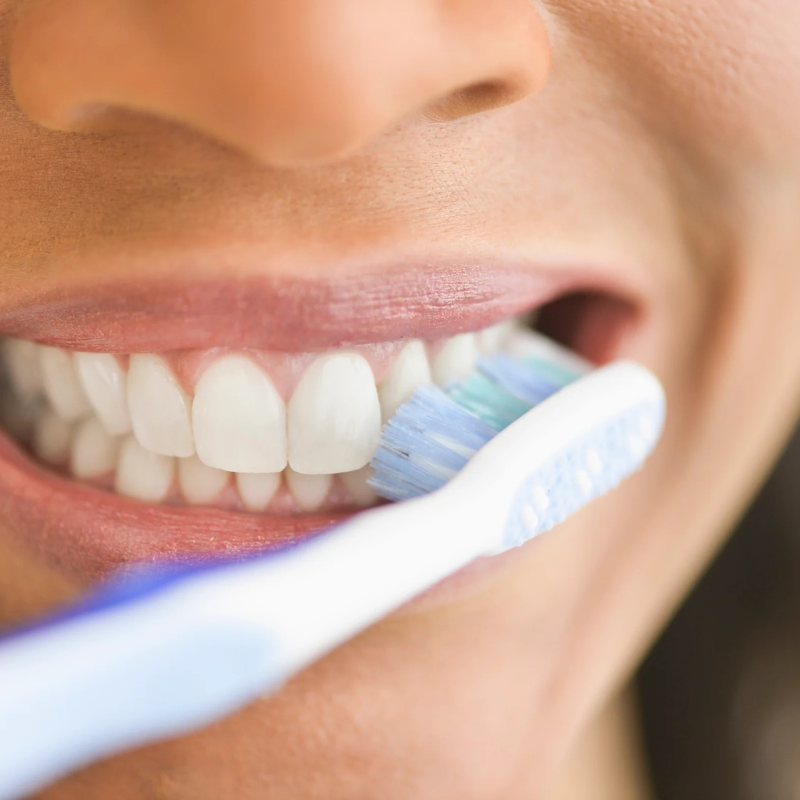
You’ve just had a fixed orthodontic appliance fitted. Your orthodontist told you to brush your teeth carefully. But no one really explained how — with brackets, wires, ligatures, and impossible-to-reach spaces.
Fixed orthodontic treatment is one of the most demanding and critical settings for oral hygiene. Brackets create dozens of new plaque-retention areas. The metal archwire makes flossing cumbersome. And the consequences of inadequate hygiene during treatment — sometimes 18 to 24 months — can be permanent.
"White spots" — white enamel demineralization spots around brackets — are the most common and most preventable complication of fixed orthodontic treatment. They are permanent. They result exclusively from inadequate hygiene. (Source: Journal of Orthodontics — white spot lesions and orthodontic treatment)
Why standard brushing is no longer enough with braces
Without orthodontic appliances, a toothbrush must clean 5 surfaces per tooth in a relatively accessible environment.
With a fixed appliance, each bracket adds:
- A surface under the bracket (space between the bracket and the gum)
- A surface above the bracket (space between the bracket and the free edge)
- Side areas around each bracket
- The archwire itself, which traps plaque and debris
A full mouth with braces multiplies hard-to-clean areas by 3 to 4.
Essential tools — What you need
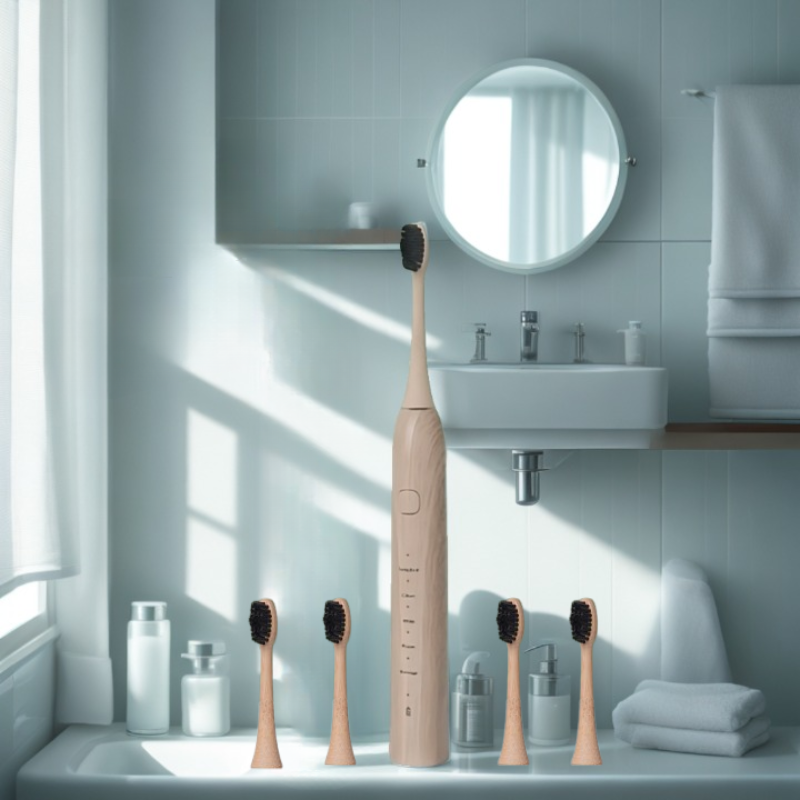
Tool 1 — Sonic electric toothbrush (essential)
The sonic toothbrush is superior to a manual toothbrush in orthodontics for one specific reason: its hydrodynamic action cleans around and behind brackets without the bristles needing to physically reach every surface.
A manual toothbrush cannot physically get around a bracket to clean the tooth surface underneath. A sonic toothbrush held near the bracket cleans the immediately adjacent areas through turbulence.
Recommended brush head: small orthodontic head (available for most sonic toothbrushes) — with V-shaped bristles that "wrap" around the bracket.
Tool 2 — Water flosser (essential)
This is where the water flosser becomes absolutely indispensable. Flossing under an orthodontic archwire requires a floss threader and can take 10 to 15 minutes for the whole mouth — something few teenagers or adults do every day.
The water flosser naturally moves around brackets, under the archwire, and between teeth in 2 to 3 minutes. It is the number-one companion to brushing in fixed orthodontics.
Tool 3 — Orthodontic interdental brushes
Small cylindrical brushes (size 0.6 to 1.2 mm) that easily pass under the orthodontic archwire to clean the tooth surface between two brackets. Slower than a water flosser, but very effective for specific areas.
Tool 4 — Floss threader (if floss is used)
A rigid threader at one end that lets you insert dental floss under the archwire. Useful as a complement to the water flosser for very tight spaces.
The exact brushing technique with braces
Step 1 — Brushing above the brackets (2 minutes)
Position the brush at a 45° angle upward relative to the brackets. With a sonic toothbrush: guide it slowly along the row of brackets, applying light pressure so the bristles contact the tooth surface above.
Step 2 — Brushing in front of the brackets (30 seconds)
Place the brush perpendicular to the brackets — bristles directly on the face of the brackets. Cleaning the bracket surface itself prevents visible plaque buildup.
Step 3 — Brushing below the brackets (2 minutes)
Position the brush at a 45° angle downward relative to the brackets. Guide it along the row to reach the tooth surface below the bracket and the gumline.
Step 4 — Water flosser (2 to 3 minutes)
Direct the stream under the archwire, between each bracket and the adjacent teeth, and along the gumline. Start with the back areas (molars) and move forward.
Step 5 — Interdental brushes (if used)
Pass the brush under the archwire between each tooth. A gentle back-and-forth motion cleans the interdental surface.
Total time: 7 to 10 minutes per session. It takes longer than standard brushing — and that’s unavoidable. A timer or music helps keep the pace.
Recommended frequency with a fixed appliance
| Time | Actions | Duration |
|---|---|---|
| Morning | Full brushing + water flosser | 7-8 min |
| After each meal | Rinse with water + quick brushing if possible | 2-3 min |
| Evening | Full brushing + water flosser + interdental brushes | 10 min |
After each meal: systematic brushing after meals is recommended in orthodontics — food gets trapped around the brackets and ferments quickly. If post-meal brushing is impossible (at school, at work), a vigorous water rinse is the minimum.
Foods to absolutely avoid with braces
| Food | Reason |
|---|---|
| Hard candy | Risk of breaking a bracket |
| Chewing gum | Sticks around brackets and wires |
| Caramelized foods | Sweet + sticky = intense bacterial buildup |
| Soft sandwich bread | Sticks to the brackets |
| Biting into a whole apple | Pressure on the brackets — cut into pieces |
| Sodas (including diet) | Acidic — erode the already weakened enamel around the brackets |
Table — Comparison of tools for fixed orthodontics
| Tool | Overall brushing effectiveness | Areas around brackets | Areas under the archwire | Ease |
|---|---|---|---|---|
| Manual toothbrush | 🟡 Moderate | 🔴 Low | 🔴 Impossible | 🟡 |
| Sonic toothbrush | ✅ Good | ✅ Good | 🟡 Partial | ✅ |
| Water flosser | ❌ Not for surfaces | ✅ Excellent | ✅ Excellent | ✅ |
| Interdental brush | ❌ Targeted only | ✅ Targeted | ✅ Under the archwire | 🟡 |
| Floss + threader | 🟡 Possible | 🟡 Difficult | 🟡 With tool | 🔴 |
FAQ
Can an electric toothbrush break brackets?
No, if used correctly — guide it gently without pressing. Brackets are designed to withstand normal brushing pressure. On the other hand, pressing hard with any toothbrush on a weakened bracket can detach it. A sonic toothbrush is even recommended by many orthodontists precisely because it does not require pressure.
How long after getting braces do the gums stop bleeding?
Gum bleeding during the first few weeks after braces are fitted is common — plaque builds up in new areas and inflammation follows. With a strict routine (daily brushing + water flosser), bleeding usually decreases within 2 to 4 weeks.
Does fluoride help prevent white spots?
Yes. Fluoride strengthens enamel and makes it more resistant to demineralization. A fluoride toothpaste with at least 1,450 ppm is recommended during orthodontic treatment. Some orthodontists also prescribe fluoride varnishes applied in the office.
Should you change your routine after the braces are removed?
After removal, teeth may have plaque buildup where the brackets were. Professional scaling and polishing immediately after removal is recommended. The routine can then return to a standard level — but maintaining good hygiene remains essential to preserve the treatment results.
Conclusion
Dental hygiene with a fixed orthodontic appliance is not harder in terms of discipline — it is longer and requires the right tools. A sonic toothbrush, a water flosser, and interdental brushes make it possible to reach all inaccessible areas and get through orthodontic treatment without cavities or white spots.
HydroJet Pro™ and PureBrush Pro™ DentalPro Smile™ — the two essential allies for your orthodontic treatment.
👉 dentalpro-smile.com/fr-fr
RECOMMENDED RELATED ARTICLES:
→ Article 2: Water flosser vs floss
→ Article 9: Dental tartar — prevention during orthodontics
→ Article 4: Invisalign aligner — an alternative to braces
Informational article only. Does not replace the advice of a dentist or orthodontist. DentalPro Smile™ — 2026.

Leave a comment
This site is protected by hCaptcha and the hCaptcha Privacy Policy and Terms of Service apply.